Papik, the ghost net
A tactile and inclusive odyssey
The project is currently being finalized. Production will be launched in early 2026, for a planned release in October 2026.
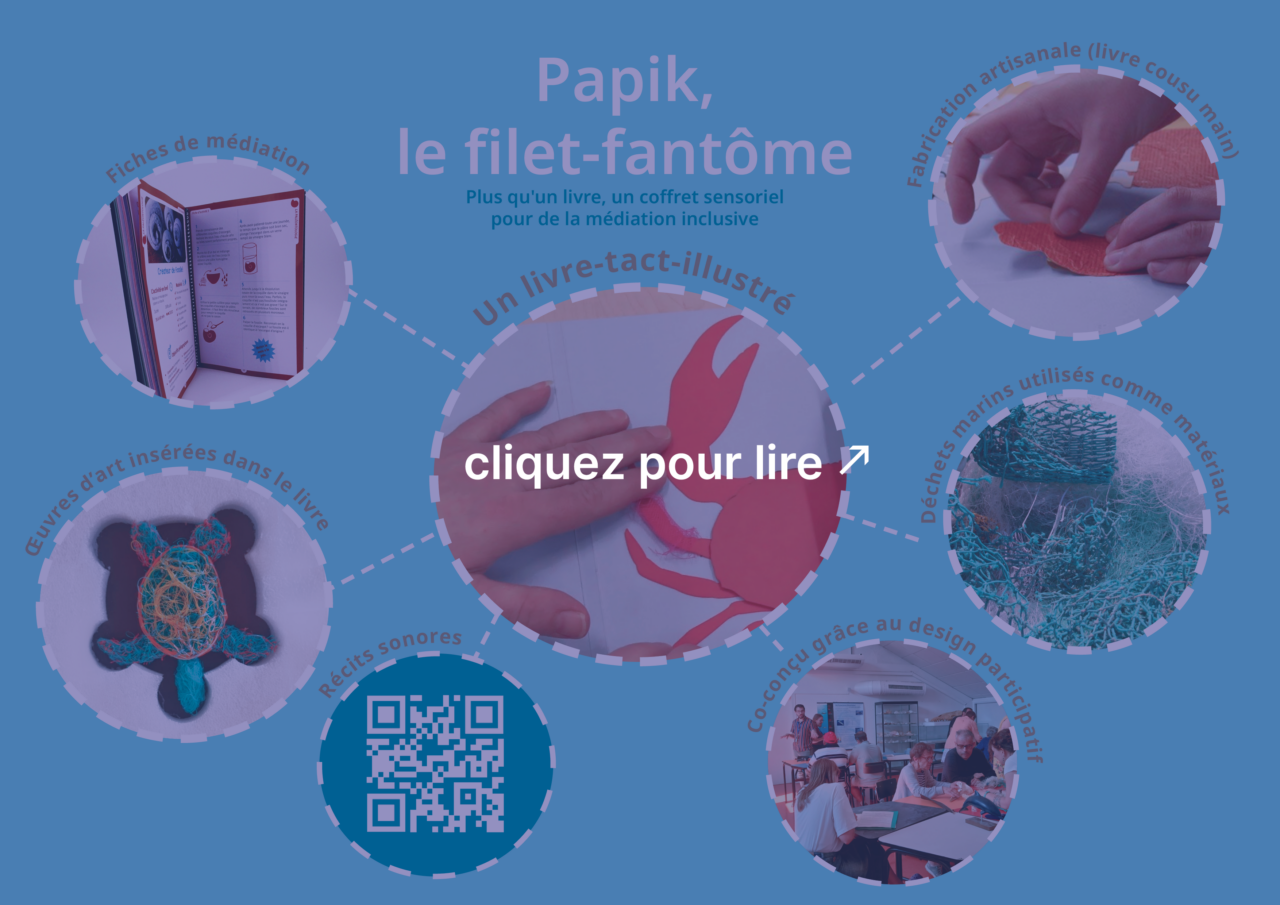
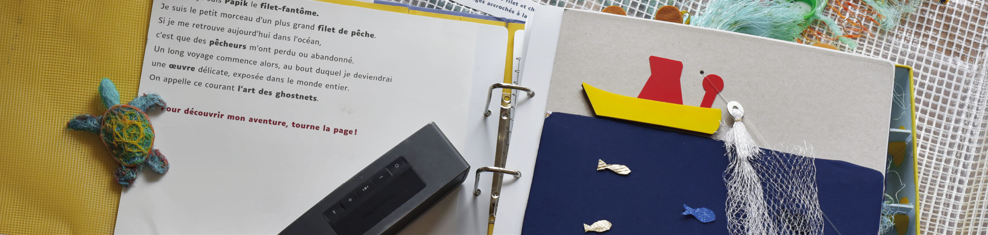
Papik, the ghost net is a unique sensory box set designed to discover ghostnet art. It is composed of a tactile illustrated book written in braille and large size print, immersive sound recordings, a kit of accessories, educational worksheets, and a user manual. Through Papik’s adventures, readers discover ghostnet art and the plastic pollution (marine wastes) that threaten the marine world.
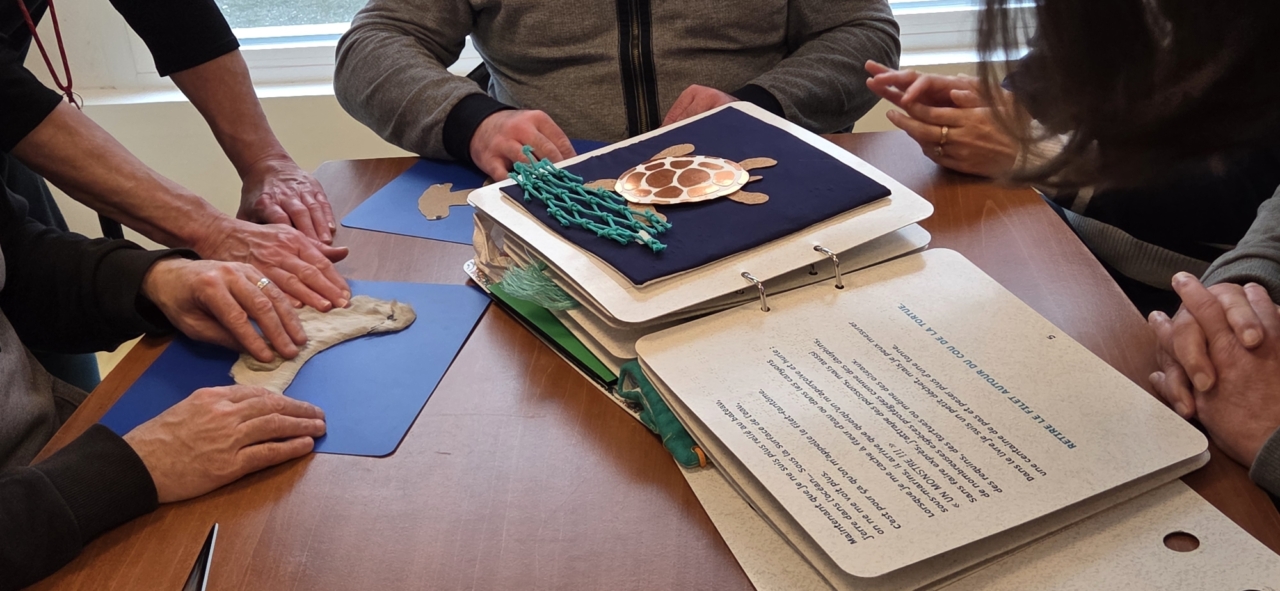
Our project was co-constructed to fulfill a dual ambition: to conduct innovative research (ERC OSPAPIK) and to make this research inclusive. By using consultative design to create an object adapted to the needs of blind and low-vision children and parents and professionals, this work offers an unprecedented multi-sensory experience that combines scientific knowledge, aesthetic pleasure, and artistic practice.
The project received the Seal of Excellence from the European Research Council for its quality and societal impact and was labeled “The Sea in Common” by the Ministry of Ecological Transition as part of the 2025 United Nations Ocean Conference (UNOC-3).
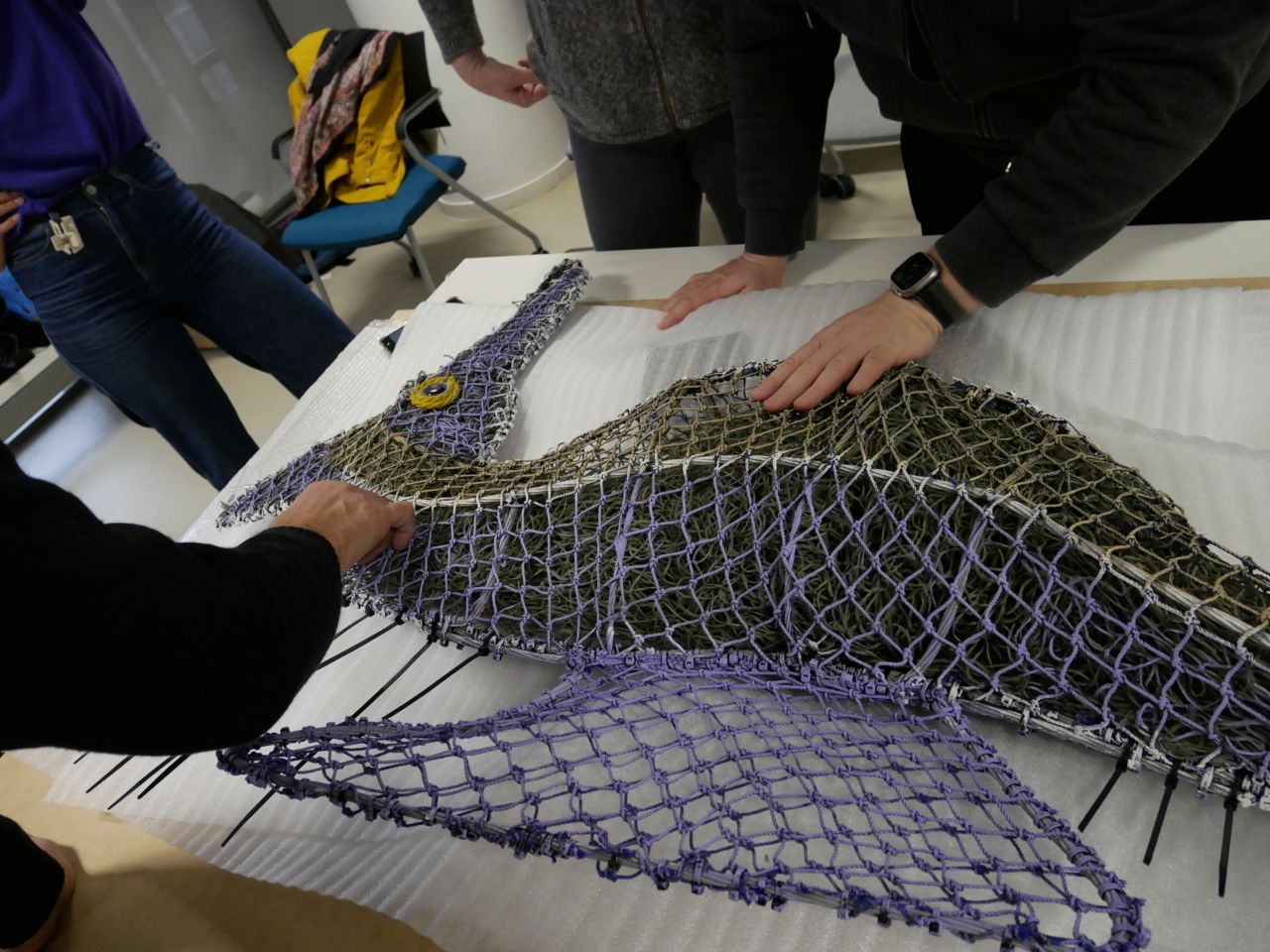
The expression “ghost nets” refers to fishing nets and gear lost or abandoned that pollute the oceans. In Australia, Indigenous and non-Indigenous artists transform these deadly marine wastes into vibrant works of art.
For over 20 years, Géraldine Le Roux, an anthropologist and curator, has collaborated with these artists to study their work and, more generally, cultural representations of the ocean. Understanding this art involves a tactile exploration: following the gestures – from sorting to transformation – and feeling the material.
This is why OSPAPIK partnered with the publishing house Les Doigts Qui Rêvent (a pioneer in tactile books for 30 years) and the Natural History Museum of Le Havre, which holds the largest collection of ghostnet art in France.
Dive into the heart of the project
Discover the origins of Papik and the co-creation workshops.

Warning: Undefined array key 1 in /home/u938374389/domains/pyxes-studio.com/public_html/wip/ospapik/www/themes/ospapik/views/components/grid.php on line 45
OSPAPIK, Les Doigts Qui Rêvent, and the Museum implemented a vast consultative design process. More than 20 workshops were organized across Europe (France, Switzerland, Italy, Portugal) and Australia.
The goal? To engage more than 300 participants – adults and children, with and without visual, motor, or mental disabilities – to test the prototypes and to pinpoint the practical requirements for inclusive cultural outreach. This inclusive approach led to a final object validated by its future users.
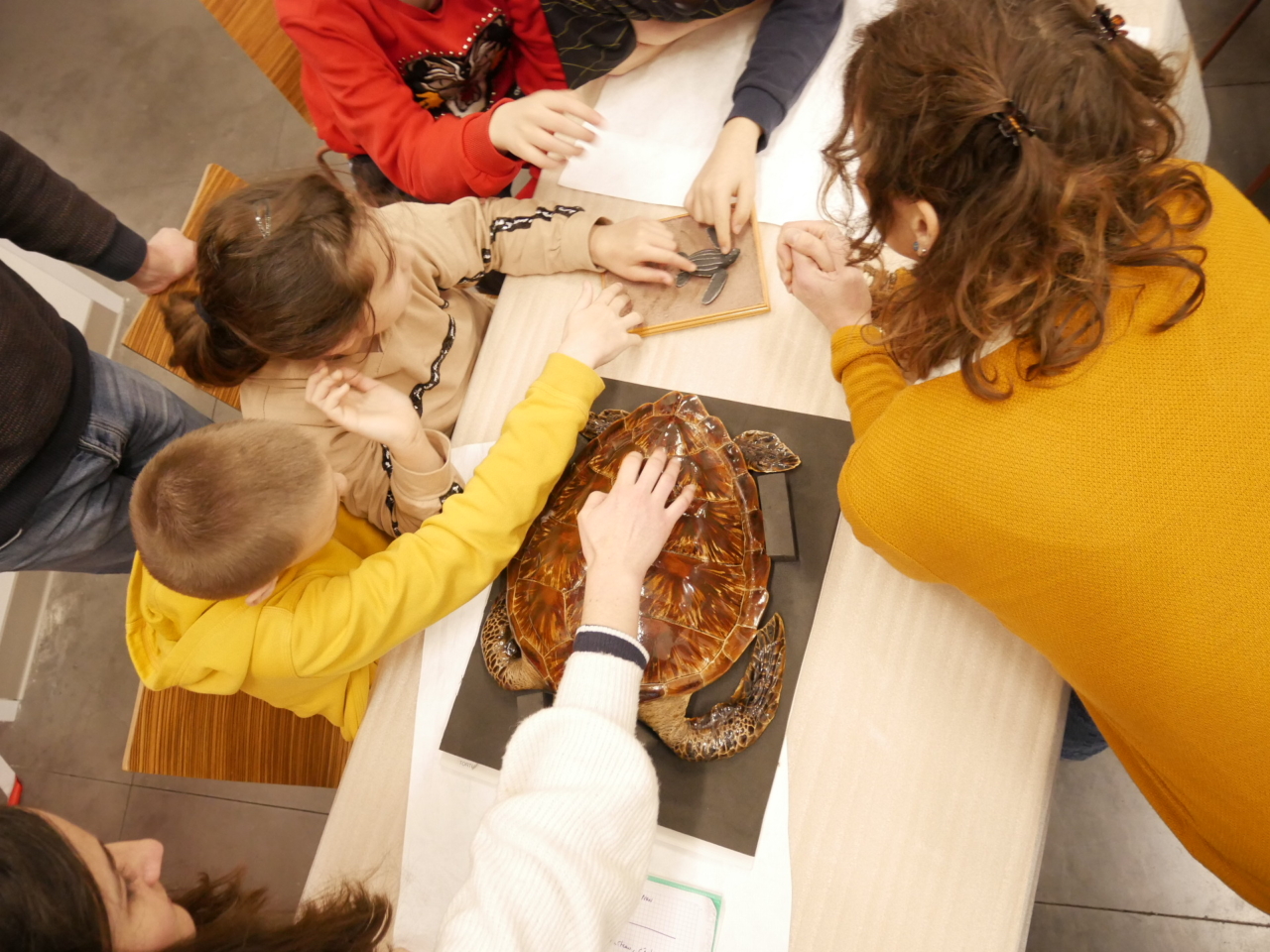
Plus qu’un livre à lire seul, le coffret Papik est un objet-dispositif, destiné à intégrer les collections des musées d’art et d’histoire naturelle, des aquariums, des médiathèques et des instituts pour jeunes aveugles et malvoyants. Il peut également être utilisé dans une salle de classe.
Comment ça marche ? Grâce au guide d’utilisation et aux fiches pédagogiques incluses, les médiateurs scientifiques et culturels disposent d’un scénario “clé en main” pour animer des ateliers inclusifs. L’objectif est de créer des espaces de rencontre où publics voyants et non-voyants apprennent ensemble, en manipulant les mêmes objets et en partageant leurs ressentis.
Une diffusion engagée : Conformément à nos engagements pour l’accessibilité (ERC Public Engagement), une partie de la production sera l’objet de dons ciblés vers des structures accueillant des publics éloignés de la culture scientifique ou disposant de peu de ressources, afin que le prix du livre ne soit jamais un frein à la connaissance. Si vous êtes intéressé.e.s pour bénéficier de l’ouvrage, ou pour soutenir l’action, contactez-nous.
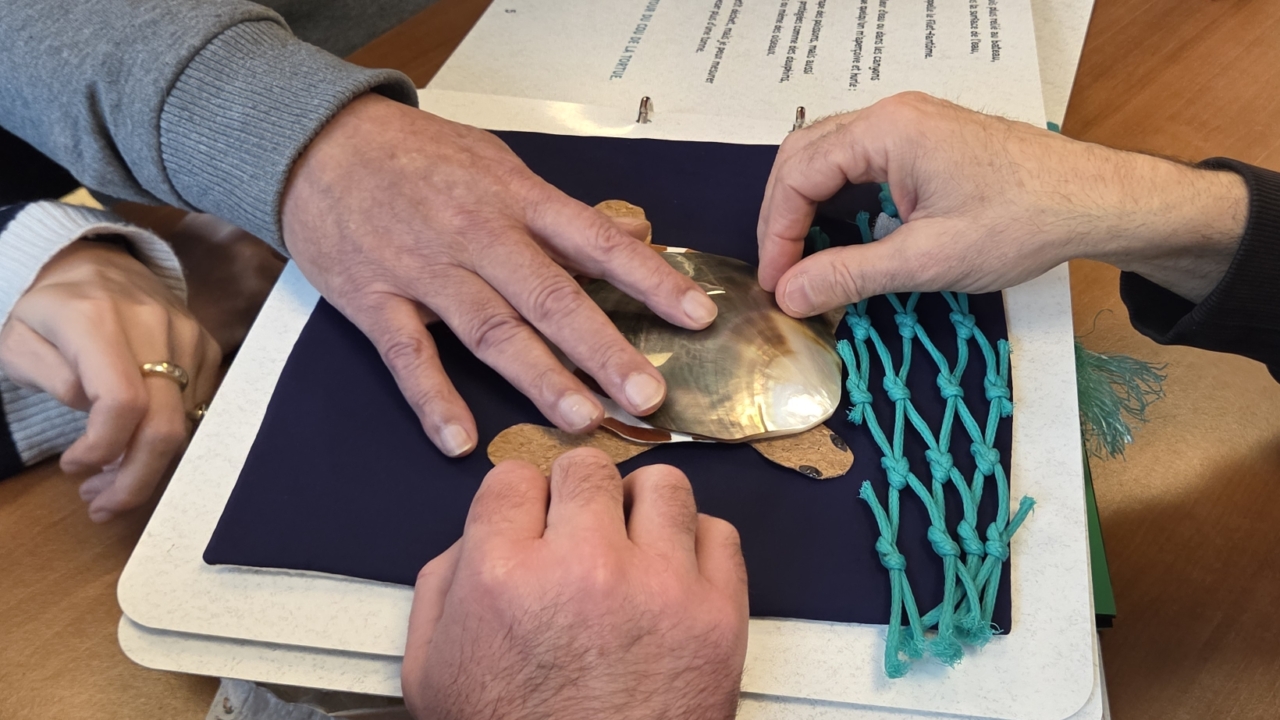
Pour une expérience authentique, le coffret est fabriqué avec les matériaux mêmes des artistes : filets-fantômes collectés sur le littoral, déchets marins et nacre d’Océanie.
Dans une démarche d’économie sociale et solidaire, la collecte et le nettoyage des filets sont confiés à un ESAT (Établissement et Service d’Aide par le Travail), favorisant l’inclusion professionnelle.
Pour l’éco-conception, nous travaillons actuellement à remplacer le papier synthétique par des matériaux biosourcé. Le tout est assemblé à la main par les couturières de l’atelier Les Doigts Qui Rêvent à Dijon.
Envie d’en savoir plus
-
Le Roux, Géraldine (2025), « Tresser les filets-fantômes, de l’océan à un livre-tactile. Faire monde avec les déchets marins », Reworlding Relations: Anthropology, Art, and Design, Ateliers d’anthropologie n°56 https://journals.openedition.org/ateliers/20468
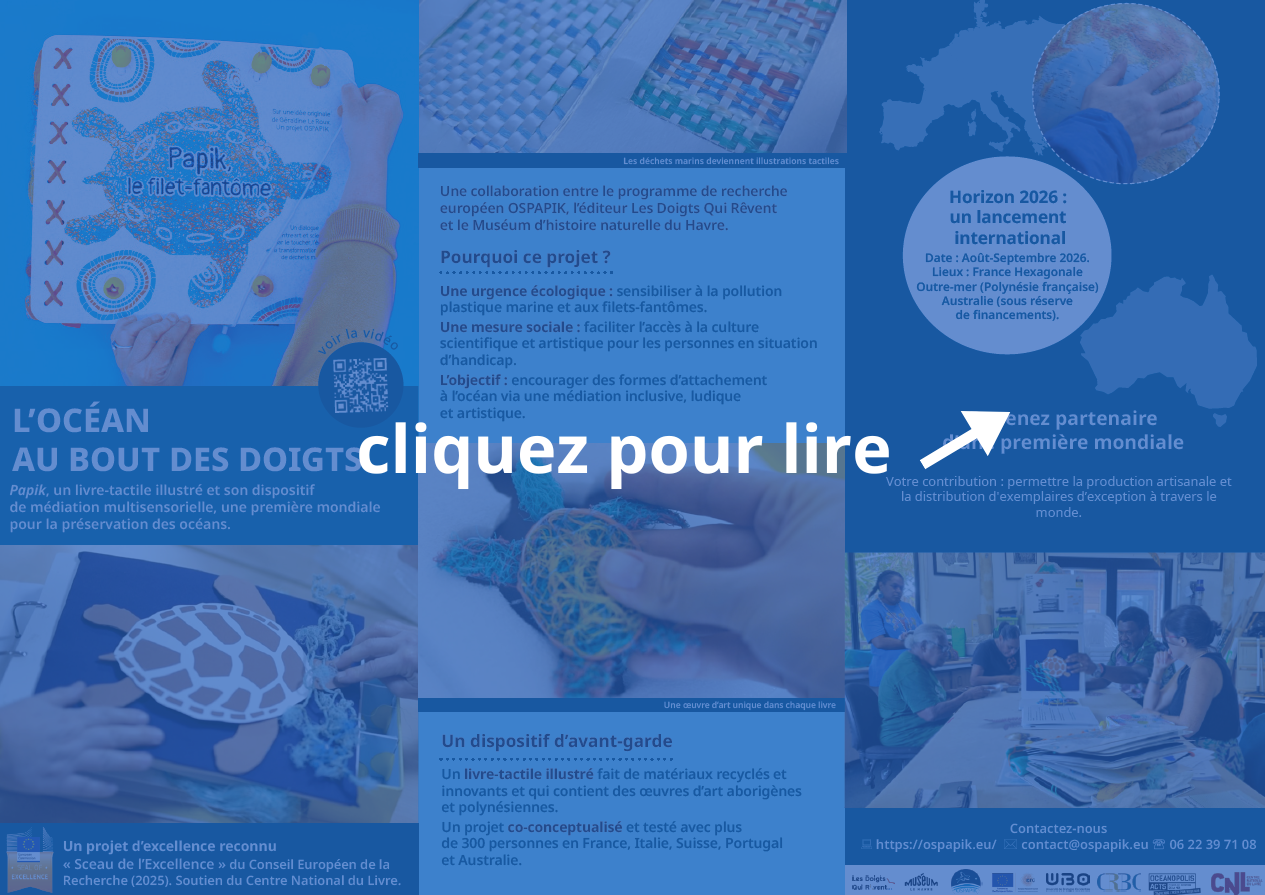
Pour en savoir plus sur les possibilités de contribution
cliquez sur l’image ->
Aveugle, non-voyant, déficient visuel : Quels termes choisir ?
Infos Pratiques
Publication du livre : Octobre 2026
Lancement international : Novembre 2026
Ce projet est soutenu par le Fonds de Dotation Océanopolis Acts, le Centre National du Livre (CNL), le Conseil Européen de la Recherche et l’Université de Bretagne Occidentale.
